
Description
Learn how an IPv4 address and subnet mask divide an address into network and host portions. The course connects binary notation with address calculations, then works through network identifiers, subnet broadcast addresses and usable host ranges. These fundamentals explain how addressing supports communication within a network and between separate networks.
The subnetting exercises develop the calculations needed to determine how many networks and hosts an address plan can support. Learners then apply those calculations to the design of addressing schemes for practical network situations. The emphasis is on understanding the numbers and their meaning, giving beginners a foundation for later networking study and configuration work.
Intended audience: Beginners studying networking fundamentals. IT professionals and aspiring network engineers revisiting IPv4 calculations.
What you will learn
- Interpret IPv4 addresses and subnet masks using binary notation.
- Calculate network identifiers, broadcast addresses and valid host ranges.
- Work out subnet and host counts for an addressing plan.
- Apply subnetting calculations when designing a network address scheme.
Course specifications
- Publisher
- Pluralsight
- Instructors
- Maher Haddad
- Level
- Beginner
- Duration
- 2 hours and 11 minutes
- Subtitle
- English
- Quality
- 720p
- Edition
- 2026-9
Course topics
View course topics
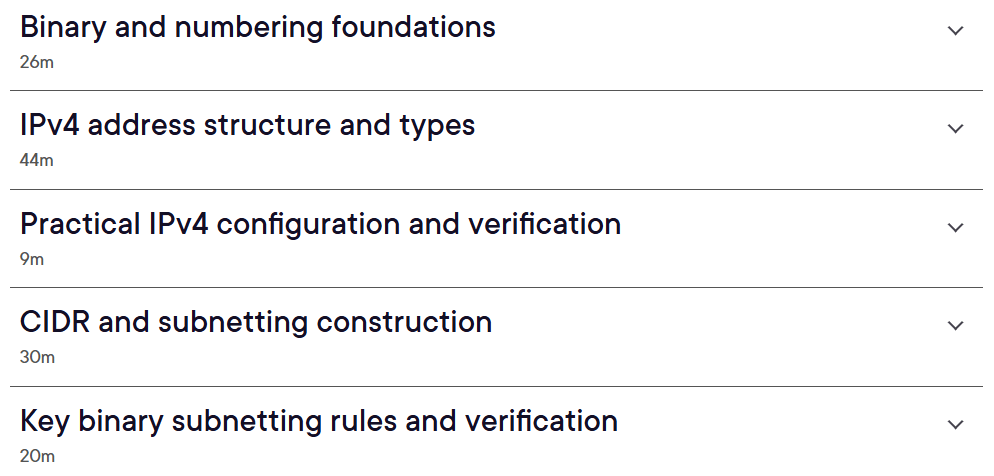
The course topics image is temporarily unavailable.
Pictures
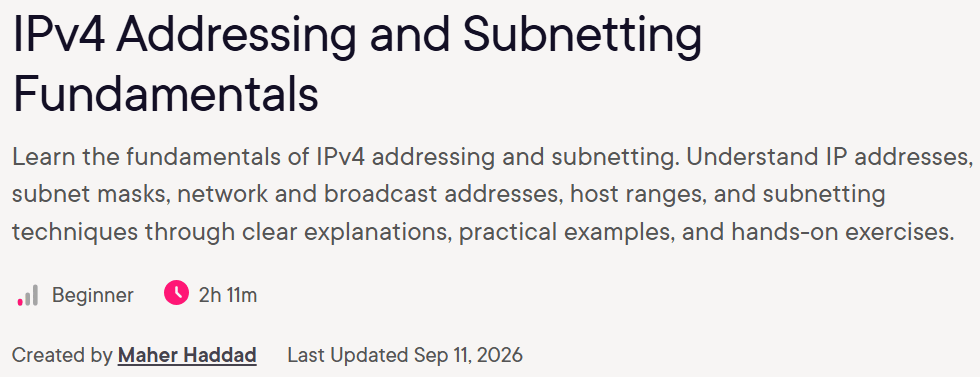
This picture is temporarily unavailable.
Introduction video
How to open the files
Keep all parts of the same edition together before extracting the first archive. Open the included course media with a compatible player.
Download resources
Choose one edition and keep its parts together. Alternate providers are available when listed.
Size
183 MB
Leave a Reply
Signed-in member comments appear immediately.